Why a Lid Changes the Pace of a Simmer
Why a lid changes the pace of a simmer: learn when to cover, vent or uncover a pot to manage evaporation and judge its heat with confidence.
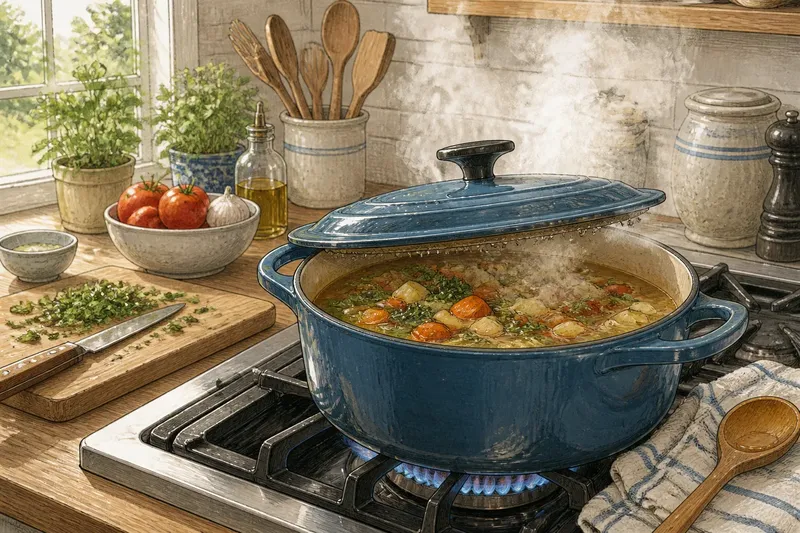
You set a pot of tomato sauce to simmer, turn to chop herbs, then hear a burst of bubbling under the lid. Why a lid changes the pace of a simmer comes down to two things: it keeps heat and water vapour in the pot, and it hides the surface where you would otherwise read the bubbles.
That does not make a lid right or wrong. It makes it a control you can adjust as the pot’s job changes. A covered pot suits some parts of cooking; a loose lid or no lid suits others.
A covered pot holds heat and vapour
As liquid heats, some of it becomes steam. With the pot uncovered, much of that vapour escapes into the kitchen, carrying water away. A lid catches it; condensed droplets may run back into the food. The contents therefore tend to lose moisture more slowly, and the trapped warmth can help the pot return to a simmer after ingredients go in.
Think of the lid as a raincoat, not a thermostat. It changes how readily heat and moisture leave, but the hob setting still matters. A strong flame or hot ring can keep a covered pot bubbling too hard. Lower the heat if the lid rattles or the contents surge, rather than assuming the cover will tame them.
Material and fit make a difference. A heavy lid tends to sit steadily, while a small gap lets some steam escape. A glass lid can show condensation and movement, but a clear view of the surface may still be hard to get. Use the pot’s behaviour, not the lid alone, to guide your adjustment.
Choose the lid for the pot’s current job
Covering is useful when you want to retain moisture, soften ingredients in a gently heated liquid, or keep a pot from losing heat while you attend to another small task. A lid can also help a broth or stew reach a steady simmer without continually replacing escaped warmth.
Uncover when the liquid needs to reduce, the sauce needs to thicken, or you want to inspect what is happening. Steam escaping carries water with it, so an open pot generally loses liquid faster. This can concentrate flavour, but it can also leave a dish too thick or expose solids before they are tender.
A partly open lid offers a middle course. Set it slightly askew if you want to slow evaporation without sealing in all the steam. Keep the handle clear of the hob and place the lid where it cannot slide; hot condensation can drip when you lift it.
Manage a simmer as the cooking period unfolds
At the start, decide what the liquid needs to do. For a pot of lentil soup, for instance, you might cover it while the liquid comes up to heat, then lower the hob until small, regular bubbles appear. Once the ingredients are gently cooking, shift the lid aside if the soup is staying too thin or the surface is hard to inspect.
During the middle stretch, check the pot whenever you stir or add an ingredient. Look for steady bubbles rather than a rolling boil, and notice whether the liquid level is falling. If the contents are bubbling vigorously, reduce the heat first. If the surface is quiet and the pot is still hot, a modest adjustment to the hob may be more useful than clamping on the lid.
As the dish nears its intended texture, choose based on the finish you want. Keep the lid on if the food still needs gentle moisture and warmth; leave it off if excess liquid needs to cook away. Stir before judging thickness, since a sauce can look loose on top while thicker ingredients settle below.
Say you are making a hypothetical pot of vegetable soup that is nearly tender but still watery. You lift the lid, stir from the bottom and let it simmer gently while you stay nearby. The expected observable result is more steam escaping and a gradually less watery broth; if the level drops too quickly, lower the heat or partly cover the pot.
Read the simmer without relying on a hidden surface
With a lid on, bubbles may be muffled and condensation may cloud the view. Listen for a soft, regular sound, watch for light movement around the rim, and lift the lid briefly when you need a clearer look. Tilt it away from your face so the escaping steam does not rise towards you.
When uncovered, small bubbles that appear gently across the surface usually signal a simmer. Large, forceful bubbles suggest the liquid is boiling more actively. The distinction is not a precise temperature reading; it is a practical cue to turn the heat down or up in small increments and watch the pot respond.
What should you do when the pot’s behaviour changes?
Should a simmering pot always have a lid?
No. Cover it when retaining moisture and warmth serves the dish, and uncover it when evaporation or a clear view matters more. A partly open lid can balance those needs.
Why does the pot bubble harder after I cover it?
The lid reduces heat loss, so the contents can become more vigorous at the same hob setting. Turn the heat down and check again rather than relying on the lid to regulate the simmer.
How can I tell whether a covered pot is simmering?
Listen for gentle, regular bubbling and look for movement near the edges. Lift the lid carefully for a brief visual check if the sound or movement is unclear.
When should I remove the lid to thicken a sauce?
Uncover once the ingredients are cooked enough to tolerate faster moisture loss, then stir and check the texture as it changes. If the sauce thickens before the food is ready, cover it loosely and lower the heat.
Make the lid part of your heat adjustment
Think of the hob and lid as two separate controls, much like a tap and a basin plug: one changes the incoming heat, the other affects what escapes. Adjusting both at once can make it harder to tell why the pot changed. Change one, observe the bubbles and liquid, then decide whether another adjustment is needed.
For a clear, flexible approach to why a lid changes the pace of a simmer, match the cover to the dish’s immediate need: hold in moisture, let liquid reduce, or keep a view of the surface. Follow the cookware maker’s guidance where it applies, and stay close when a pot is covered on active heat. A small change in lid position can be enough to keep dinner moving at a gentler pace.