Before the Timer: How Cooks Kept Track of Time
Before kitchen timers were common, cooks judged duration through routine, fire and food cues; learn how these signals guided cooking and recipes.
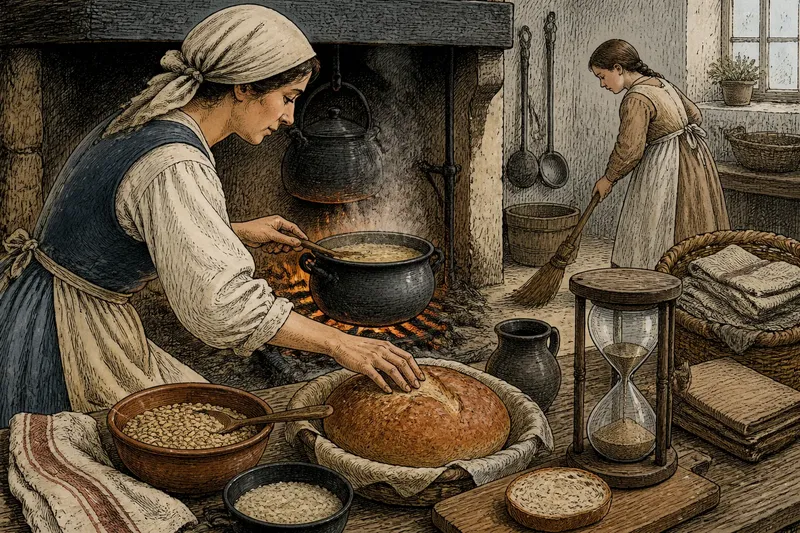
A pot begins to burble while someone lays the table, and a loaf’s crust darkens as the fire settles. Before kitchen timers were common, cooks tracked time through such routines and signs, not by relying on one universal method. The clues varied with the household, its tools and the food being prepared.
Household rhythms offered rough cues
A clock could tell a household the hour without serving as a cooking timer. Access to clocks varied across periods and communities, and a cook with a clock nearby still had to remember when a dish went on. Bells, deliveries, returning family members and familiar chores could provide useful landmarks in the day.
These cues helped when routines stayed steady. A cook might begin a dish alongside another regular task, then return when that work was done. An interruption could unsettle the plan, so the food still needed attention. Routine marked a likely moment to check, not a precise interval.
Knowing the time and knowing whether food is ready are different judgements. A clock can mark elapsed time, but it cannot tell whether a fire is too fierce or a grain has softened. Cooks often used duration alongside signs from the dish itself.
Fire and food gave cooks visible and audible signs
Cooking over a hearth or open fire called for continual adjustment. A cook watched the coals, moved a pot closer or farther from the heat, and listened to what was happening inside. A lively boil, a quiet burble, a forming crust or a change in smell could all offer information.
Different foods called for different observations. A kettle might announce a boil through sound. A loaf offered clues in its crust and, in some traditions, the sound it made when tapped. Grains and beans changed gradually, so a cook might stir and sample them to judge their texture.
These judgements can be hard to reduce to a number. “Let the sauce coat the spoon” describes an observable result; “keep it at a gentle simmer” asks the cook to recognise a pattern of small bubbles. Such descriptions remain useful because heat and cookware affect how quickly food changes.
Routine and shared work helped cooks remember
Daily work gave cooking a wider frame. A dish might be set over the fire while someone fetched water, tended animals or mended clothes. In a shared kitchen, one person’s task or familiar sound could remind another to return to a pot. This was a practical arrangement, though not a precise measure.
Imagine a cook putting porridge over low heat as a family member begins sweeping. When the floor is clear, the cook returns, stirs and checks whether the grains have softened and the mixture has thickened. If a visitor interrupts the sweeping, that reminder slips; the cook must judge the porridge itself and keep watching the heat.
Shared labour mattered, too. Someone tending several dishes might ask another person to listen for a change in sound or call when a task was finished. A later written instruction to cook for a set duration can make that cooperation less visible.
Clocks and hourglasses marked intervals differently
Clocks, watches and hourglasses offered ways to mark time, but their availability and usefulness depended on the setting. An hourglass could mark an interval without a clock face. A clock or watch could show the hour and, depending on its design and accuracy, smaller divisions. None removed the need to notice when cooking began and to check the result.
A dedicated timer could make a chosen interval easier to track: set it, then return when it sounded. Yet a ring did not account for every variation in fire, vessel or ingredient. The change was not a simple passage from guesswork to exactness. Timekeeping supported cooking judgement; it did not replace it.
Written recipes used duration alongside sensory cues
The spread of written recipes that specify durations was gradual and uneven. It depended on access to timekeeping, publishing practices and the intended reader, among other factors. Rather than implying that clocks and timers became ordinary in every kitchen at once, it is more accurate to see timed instructions as one form of guidance that developed alongside older descriptions of texture, heat and appearance.
A written duration travels more easily than a gesture or a household routine. It can give readers a shared starting point, especially when they cannot watch an experienced cook. But “cook until tender” asks for a different kind of knowledge from “cook for a while” or a stated interval. Many useful instructions combine an approximate duration with a visible or tactile cue.
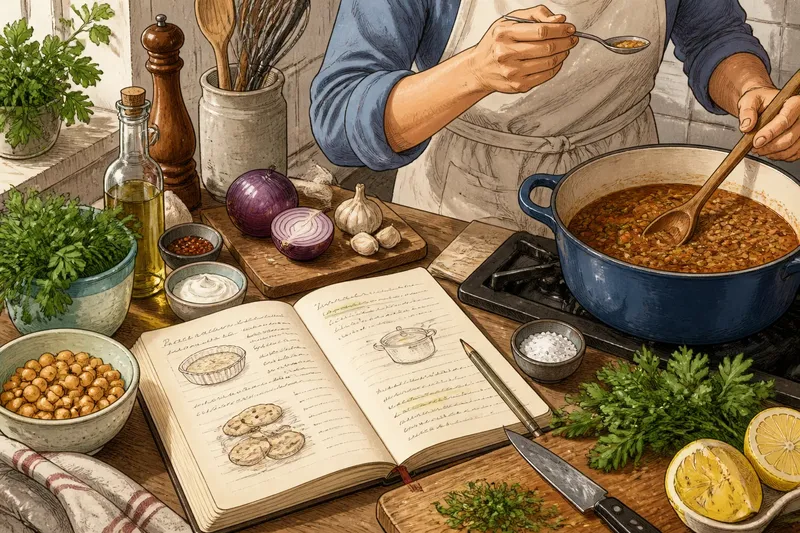
Say a reader is making a pot of lentils and the recipe names a cooking interval but also says to look for lentils that are tender yet hold their shape. The reader uses the stated time to decide when to begin checking, then samples a lentil. If it remains firm, the reader keeps cooking and checks again; if it has softened without collapsing, that is the recipe’s observable signal to move on. The duration organises attention, while the food answers the final question.
How did cooks judge time and readiness?
Did cooks use clocks in the kitchen?
Some households had access to clocks or watches, but their use varied by period and circumstance. Even with one nearby, cooks also relied on recurring routines and changes in the food.
How did cooks know when food was ready?
They watched, listened, smelled, touched or tasted as the dish required. Bubbling, browning and softened grains are examples of changes a cook could observe directly.
Why do recipes pair a duration with a sensory cue?
A duration helps organise attention and suggests when to begin checking. A cue such as tenderness or a particular consistency helps the cook decide whether the dish is ready despite differences in heat and cookware.
Can a timer replace a cook’s judgement?
A timer can remind someone to return, but it cannot assess texture or the force of the heat. It is a prompt for observation, not a verdict on the food.
Use a timer as a prompt to look
For a home cook, the practical lesson is simple: treat a timer as a reminder to check the dish. When a recipe gives a duration, look for the signs it describes. If the food needs more time, continue to judge its condition rather than assuming the first ring settles the question.
Notice what you see when a dish reaches the result you want. If a sauce has thickened enough to coat a spoon, remember that visual cue as well as the timer’s signal. Like a bookmark in a book, the timer marks where to return; it does not read the page for you.
Before the timer, cooks made time workable through routine, fire and the changing appearance of food. Those clues still matter. A clock can make an interval easier to share, while the cook’s attention tells when the dish has reached its intended state.