A Potluck Table That Makes Room for Different Dishes
Plan a potluck table that makes room for different dishes, with clear labels, serving space and a flexible mix that helps guests eat comfortably.
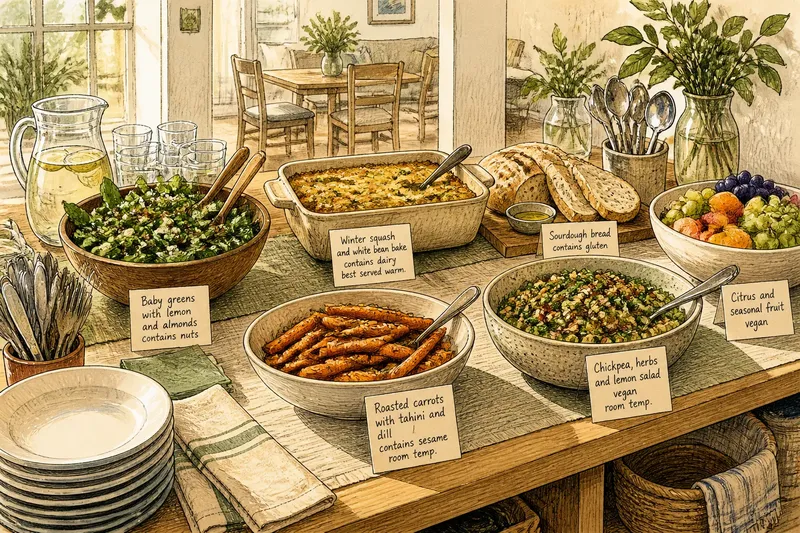
You have cleared the kitchen table, but the dishes are already arriving: a warm casserole, a bowl of dressed greens and a loaf that needs slicing. Planning a potluck table is less about assigning everyone the same menu and more about making these different contributions easy to serve and enjoy.
A simple plan can leave room for surprise while preventing the practical snags: nowhere to put a serving spoon, no clue what is in a dish, or a queue that blocks the drinks. Think of the table like a well-used bookshelf: each item needs a place, but the arrangement should still leave room for something new.
Choose the table’s shape before choosing dishes
Start by looking at the room, not by writing a menu. Decide where guests will enter, where they can set down food, and where people can sit or stand to eat. If the dining table is small, a sideboard or cleared kitchen counter can hold drinks, plates or desserts. Keep the route between the food and seating open.
Choose one serving direction. Guests can move along a counter, or approach a table from one end and leave from the other. A loop may work in a spacious room, but it can turn into a knot in a narrow kitchen. Leave a landing spot at the beginning for plates and at the end for cutlery or napkins.
Then identify what the room can comfortably accommodate. A wide dish may need more room than its serving portion suggests, especially if people need space to lift a lid or reach a spoon. You do not need a floor plan. A quick look at the clear surface, chairs and doorways is enough to guide the invitations.
Invite contributions by role, not by fixed recipe
Send guests a friendly note with the time, location and broad shape of the meal. Rather than assigning recipes, name a few useful roles: something filling, something fresh, bread or another accompaniment, and something sweet. Let guests choose what they enjoy making or bringing.
Ask each person to tell you the dish name, whether it needs to be kept warm or chilled, and what serving utensil it requires. Invite them to mention ingredients that may matter to other guests, such as nuts, dairy or meat. This gives you information for arranging the table without asking anyone to disclose more than they wish.
Make it easy to opt for a modest contribution. Someone might bring a jar of olives, sliced fruit or good bread rather than cook. A potluck is shared effort, not a test of kitchen ambition. If several guests offer similar foods, welcome the overlap; two salads can be different in texture, seasoning or use.
Make a flexible mix from what guests offer
Once replies arrive, sort them by how they serve the meal rather than by cuisine or course. Notice whether there is something substantial, something crisp or fresh, a filling side, and a sweet or fruit-based finish. Treat these as prompts, not quotas. The aim is a table with choices, not a perfectly balanced menu.
Look for practical gaps. If most contributions are rich and soft, a simple bowl of sliced cucumber, tomatoes or citrus may add freshness. If guests are bringing several dishes that need a spoon, make sure there are enough serving utensils. If everything is intended to be eaten hot, consider whether the available oven and hob can handle that; you can ask for a room-temperature dish or provide one yourself instead.
Say you are hosting in a flat with a narrow counter, and three guests offer casseroles while another brings a leaf salad. You could ask one casserole-maker whether their dish is also pleasant at room temperature, then add bread and a bowl of fruit. The expected result is a spread with varied textures and fewer demands on the oven, while the guests still choose their own dishes.
Arrange the potluck table for easy serving
Before guests arrive, set out plates, cutlery, napkins and serving spoons. Put a small plate or folded cloth beside dishes that may leave drips, and keep a clear patch of surface for late arrivals. If a dish comes in a large roasting tin, you can offer to transfer it to a serving bowl, but check with its maker first.
Place food in a sequence that makes sense to a guest holding a plate: plates first, then substantial dishes and sides, followed by bread, sauces and any finishing touches. Put drinks somewhere separate if reaching for them would interrupt the food line. Keep hot and chilled foods in suitable conditions, following the food maker’s or manufacturer’s instructions and local food-safety guidance where relevant.
A handwritten card beside each dish can answer ordinary questions without turning the meal into a formal buffet. Include the name, a short description and useful ingredient notes. For example: “Roasted carrot and lentil salad — contains sesame; served at room temperature.” Use clear wording, and do not make claims about allergens or dietary suitability unless you can confirm them.
What should guests know before they arrive?
Should I assign a dish to every guest?
Usually, broad invitations are enough: ask for a filling dish, a side, something fresh or a sweet. Assign a particular contribution only when you have a clear practical gap, and give the guest room to suggest an alternative.
How do I handle dietary needs?
Ask guests privately what they need to eat comfortably, then pass relevant information to the people bringing food. Label ingredients plainly and keep separate serving utensils where that helps avoid mixing dishes.
What if a dish needs reheating?
Ask about heating needs before the day and decide whether your kitchen can accommodate them without crowding other food. If not, invite the guest to bring something that can be served at another temperature or arrange a simpler alternative.
How can I stop the serving area becoming crowded?
Use one clear direction for the food line, keep drinks aside and leave a landing place for dishes. Guests can also bring food to the table in turns rather than all arriving at the counter together.
Keep the host’s part pleasantly small
Set out water, a few spare serving tools and a place for empty containers. Let guests know where they can leave coats and bags, so chairs remain available for sitting. If someone asks what to bring at the last minute, suggest a simple, useful item rather than inventing another course.
During the meal, pay attention to what needs attention without trying to manage every plate. Refill water, shift a dish if the queue catches, and make room when another contribution appears. A potluck table that makes room for different dishes does not need perfect symmetry. It needs clear paths, useful descriptions and enough flexibility for people to share what they genuinely wanted to bring.